

Rumor : Verizon and Apple Already Testing 4G iPhon
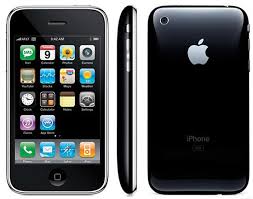
This rumor simply has to be taken with a grain of salt, but word has it that Verizon and Apple are testing a version of the iPhone on Verizon’s upcoming 4G LTE network.
For those unfamiliar with the landscape, 4G is essentially the next-generation of cellular networks, designed to carry data and increase the speed and capacity of mobile networks. Although the rumor is unconfirmed, it would make a lot of sense for Apple to hold out for the LTE deployment in order to get more mileage out of the R&D dollars it needs to spend to make a version of the iPhone compatible with Verizon’s network.
The rumor sources note that Verizon CEO Lowell McAdam has been making bi-monthly trips to Mountain View to visit with Google (), culminating in an announcement of Android phones coming to Verizon. Apple’s headquarters are a mere 8.5 miles away, lending further anecdotal evidence to the idea.
We know that Verizon is steadily making progress on their next-gen LTE (Long Term Evolution) network, having already begun successful testing of data calls. We also know there are many logical reasons to expect that AT&T exclusivity for the iPhone will end, with analysts and pundits alike all placing the timeframe in 2010 for this to happen. Even the Department of Justice is taking an interest in getting the iPhone onto more networks.
What remains unknown are the specific details. It does seem like it fits with Apple’s M.O. to want to make a big splash with a 4G iPhone launch on the U.S. largest carrier, but keep those salt shakers at the ready until we get some official confirmation.
If you’re a current iPhone owner, would you consider ditching AT&T for Verizon if the option were available? If you’re not an iPhone owner, would you consider picking one up if it came to another carrier? Let us know in the comments.
Apple to launch Verizon iPhone in Q3 2010


iPhone
Mac OS X v10.6 "Snow Leopard"
Main article: Mac OS X Snow Leopard
Mac OS X v10.6 "Snow Leopard" was released on August 28, 2009. Rather than delivering big changes to the appearance and end user functionality like the previous releases of Mac OS X, Snow Leopard focuses on under the hood changes, supposedly increasing the speed, efficiency, and stability of the operating system. For most users, the most noticeable changes are: the disk space that the operating system frees up after a clean install compared to Mac OS X 10.5 Leopard, a more responsive Finder rewritten in Cocoa, faster Time Machine backups, more reliable and user friendly disk ejects, a more powerful version of the Preview application, as well as a faster Safari web browser.
The rewrite of Finder in Apple's native Cocoa API allow the Finder to take advantage of the integrated 64-bit technology as well as Grand Central Dispatch, use a more user-friendly disk eject (clearer dialogs will notify the user of what services or programs are using a given disk), and provides it a more responsive feel overall.
The new Safari 4 includes a boost in JavaScript and HTML performance, which results in faster web browsing. The majority of this performance boost is enabled by the new SquirrelFish JavaScript interpreter, improving the JavaScript rendering speed of Safari by over 50%.[82] The new Top Sites also displays the most frequently visited and/or bookmarked sites in a panorama view, allowing the user to easily access their favorite sites along with a new Cover Flow view for the user's browsing history. Safari 4 is now also more crash resistant, being able to isolate plug-ins which are the number one cause of web browser crashes.[83]
Mac OS X v10.6 also features Microsoft Exchange Server support for Mail, iCal, and Address Book, new 64-bit technology capable of supporting greater amounts of RAM, an all new QuickTime X with a refreshed user interface and more functionality that used to be only available to Quicktime Pro owners.
Back-end platform changes include improved support for multi-core processors through Grand Central Dispatch which attempts to ease the development of applications with multi-core support, and thus improve their CPU utilization. It used to be that developers needed to code their programs in such a way that their software would explicitly take advantage of the multiple cores, which could easily become a tedious and troublesome task, especially in complex software. It also includes advanced GPU performance with OpenCL (a cross platform open standard for GPGPU distinct from CUDA, Dx11 Compute Shader or STREAM) by providing support to offload work normally only destined for a CPU to the graphic card's GPU. This can be especially useful in tasks that can be heavily parallelized.
Snow Leopard supports only machines with Intel CPUs, and drops default support for applications built only for the PowerPC architecture (Rosetta can be installed as an additional component to retain support for PowerPC-only applications).
From Wikipedia, the free encyclopedia

Mac OS X v10.5 "Leopard"


Mac OS X v10.4 "Tiger"


- A PowerPC G3, G4, or G5 processor running at 333 MHz or more
- Built-in FireWire
- At least 256 MB of RAM (512 MB or 1 GB recommended)
- At least 3 GB of available hard disk space; 4 GB of disk space including the Xcode 2 Tools
- DVD drive (CD media exchange was available; offer ended 19 March 2007)
Mac OS X v10.3 "Panther"

- PowerPC G3, G4, or G5 processor (at least 233 MHz)
- Built-in USB (indicative of a New World ROM being present)
- At least 128 MB of RAM (512 MB recommended, 96 MB supported unofficially)
- At least 1.5 GB of available hard disk space
- CD drive
- Internet access requires a compatible service provider; iDisk requires a .Mac account
- 333 MHz or faster PowerPC G3, G4, or G5 processor
- broadband Internet access (100 kbit/s or faster)
- Compatible FireWire DV camera or web camera
Mac OS X v10.2 "Jaguar"

Jaguar was the first Mac OS X release to publicly use its code name in marketing and advertisements, a practice that has continued in subsequent releases of the operating system.
From Wikipedia, the free encyclopedia


